
DeKalb Previous Residents by Era
The best source depends on the date. Recent title changes are indexed by the Clerk; older owners may require courthouse books or archive film. Occupants can surface in directories and census schedules, while maps and permits date the building itself. Cemetery, probate, and obituary evidence can close a household trail.
| Source | Local span | Access point | Evidence |
|---|---|---|---|
| Landmark recorded index | 1979 to current | Clerk web portal | Conveyances, liens, plats |
| Older deed books | Formation era to 1978, surviving series | Courthouse, Archives, FamilySearch | Title chain and legal descriptions |
| City and reverse directories | From 1928, not continuous | Decatur Library and DHC | Occupant, spouse, work, address |
| Federal census | County context from 1830; public through 1950 | NARA and library sources | Household, age, birthplace, tenure |
| Sanborn maps | Edition dependent | DCPL, DLG, Library of Congress | Footprint, use, address continuity |
| Cemetery records | Decatur 1837 to 1979 plus county index | DCPL and DHC | Death and burial endpoint |
| Permit records | Modern portals; older dates vary | County or city planning | Construction and alterations |
For a late twentieth-century question, start with appraisal and Landmark. For the mid-century years, pair directory volumes with the released census nearest the date. Before 1928, legal descriptions, deed books, census enumeration geography, cemetery records, and archive microfilm carry more weight than a modern address search.
Anchor DeKalb House History Today
Search the current situs in DeKalb County Property Appraisal. Record the parcel ID, assessed owner, tax mailing address, legal description, building traits, and latest deed reference. The situs is the physical parcel. Mailing is only where tax notices go. Neither field alone supplies a roster of previous residents.
The parcel ID and legal description are the best continuity checks when a road changes name or number. DeKalb's older land identity often uses the 15th, 16th, or 18th land district and a land lot. A recorded subdivision may add a lot and block. Preserve both the old and current address forms instead of forcing them into one modern label.
GIS handoff. If the profile lacks book and page, DeKalb's mapping team can identify the latest deed or plat reference from an address or parcel ID.
Walk DeKalb Owners Backward
Landmark Web indexes DeKalb County recorded instruments from 1979 to the present. The seven search routes are Name, Document, Book Page, Parcel ID, Record Date Range, Instrument Number, and Legal. Start from the newest deed, then use each seller's earlier acquisition to move back. Compare the same parcel or legal text at every turn.
- Copy the parcel ID, current owner, legal description, and latest book and page from appraisal or GIS.
- Open the current purchase deed. Save the grantor, grantee, recording date, instrument number, legal text, and any recital of an earlier deed.
- Search the seller as a grantee to find when that seller acquired the same land. Try every spelling variant and narrow the date range.
- Repeat the seller-to-earlier-grantee link until the chain reaches the electronic cutoff. Do not join names without matching legal evidence.
- Continue in handwritten grantor and grantee indexes, courthouse deed books, Georgia Archives microfilm, or FamilySearch images.
- Grantor / grantee
- The grantor transfers an interest, and the grantee receives it.
- Chain of title
- The linked series of recorded transfers for the same land.
- Legal description
- The durable land identity, often based on district, land lot, subdivision, lot, block, or bounds.
- Enumeration district
- A census-taker's assigned area, useful when a historic address is hard to find.
The index provides party roles, book and page, document type, instrument number, and recording date. A deed image may add execution date, consideration, reservations, and a prior reference. Clerk staff assist public researchers at the counter from 8:30 a.m. to 4:30 p.m. on weekdays, but do not perform deed research by phone.
Cross DeKalb's 1979 Cutoff
A quick recent search and an older title search are different tasks. Landmark's 1979 notice marks the electronic index boundary, not the start of DeKalb deeds. DeKalb County was created in 1822. Surviving older books can be examined at the courthouse, while Georgia Archives and FamilySearch are strongest for pre-1900 county material.
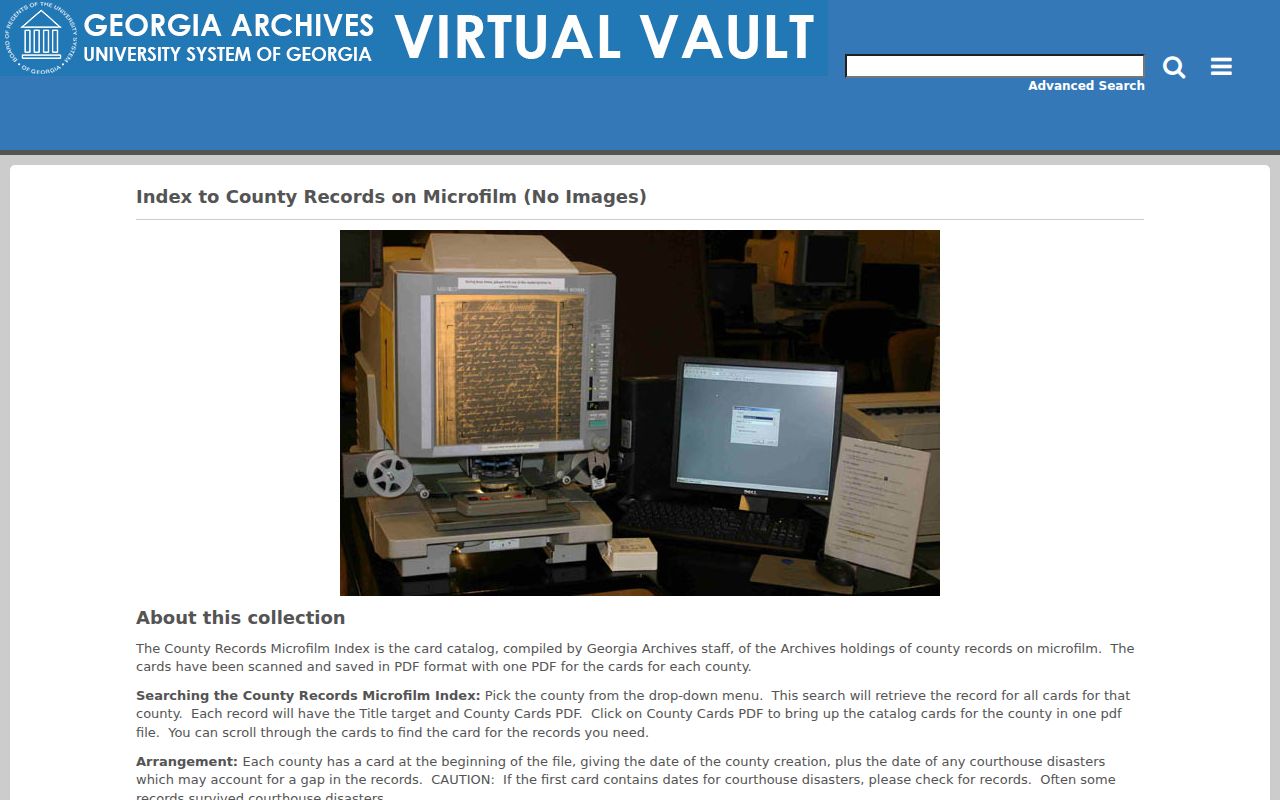
The Georgia Archives County Records Microfilm Index helps identify the available series and their gaps. A disaster note does not prove that all records vanished. Inspect the catalog cards and surviving volumes. Many image sets are browsed rather than name searched, with a handwritten index near the front of a book. Keep county, court, series, book, page, and index citation in the research log.
Open the Georgia county microfilm index before planning an archive search.
Date a DeKalb Address
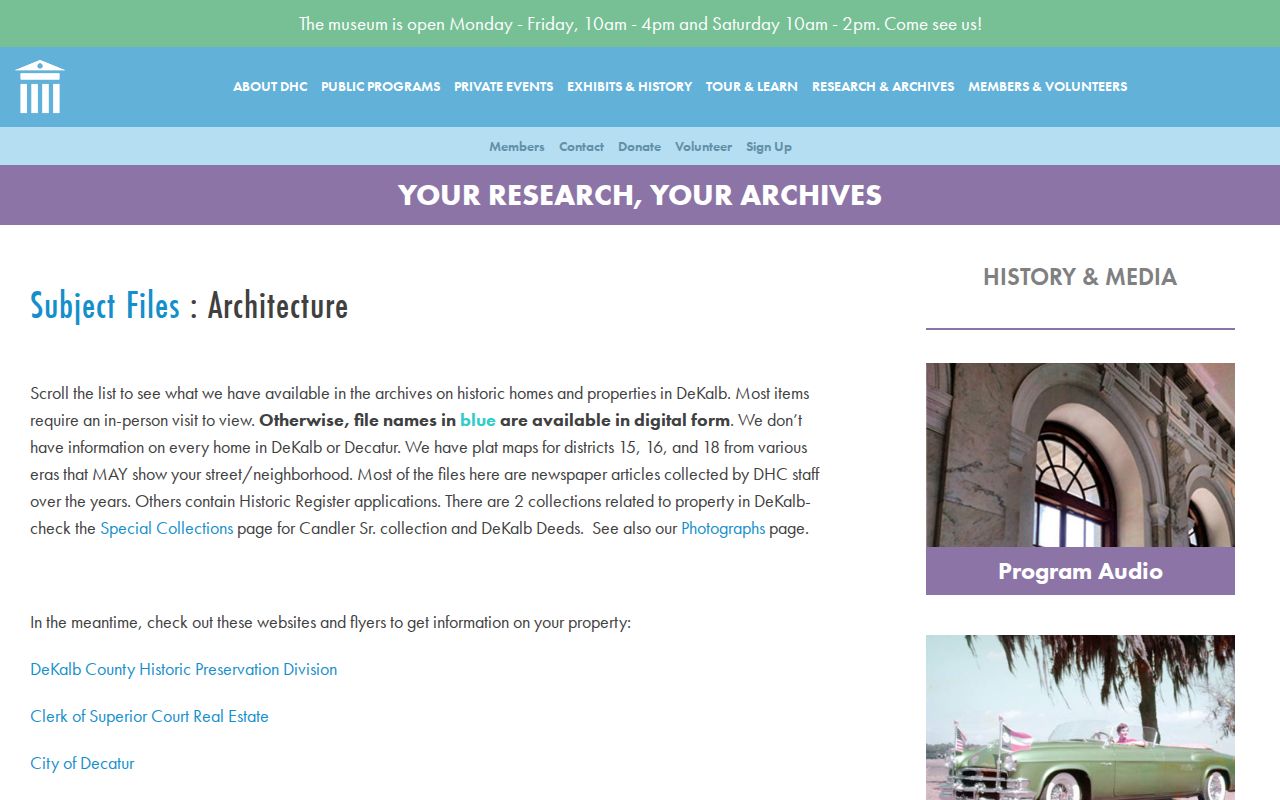
Deeds date transfers, not always the building. DeKalb History Center architecture subject files add plats for the 15th, 16th, and 18th districts, property files, historic-register applications, DeKalb Deeds and Candler material, and a house-research route. Georgia Sanborn maps can show footprint, construction clues, use, and a period street number where an edition survives.
Permits may show work type, applicant or contractor, date, and status. First verify the issuing jurisdiction in GIS. A Decatur or Atlanta postal name may still fall under county control, while an incorporated city may keep its own portal or paper cards. Ask the correct custodian for an existing permit series when online coverage stops.
DHC's Sycamore Street research shows the value of combining city files, directories, and Sanborn maps: small rear dwellings can be recovered even when prominent newspapers overlooked them. Such a structure may explain an extra household or address variation without proving exactly who occupied it.
Review the DeKalb History Center architecture collection before requesting files.
Compare DeKalb Previous-Owner Eras
A recent deed and a nineteenth-century deed require different methods. A 2019 transfer can be found in seconds through Landmark's indexed modes, then checked by instrument number, book and page, recording date, party role, and legal description. An 1890s transfer may require a handwritten grantor or grantee index followed by page-by-page browsing in a deed book or microfilm image set.
State the boundary beside every negative result. “No match” in Landmark means no match in the 1979-current electronic index under the names and fields searched. It does not mean the land lacked an earlier owner. Beyond the cutoff, use the Clerk's public counter, Georgia Archives County Records Microfilm Index, and FamilySearch county books. Preserve each spelling variant and follow the legal description rather than joining two people merely because their names resemble each other.
Keep DeKalb Address History Continuous
Modern postal text is often the weakest historic key. A “Decatur” address may lie outside the City of Decatur, and an “Atlanta” label can still point to a DeKalb County parcel. Census enumeration districts also changed as Atlanta expanded and DeKalb municipalities formed. Preserve each period street spelling and postal label, then bridge them with parcel ID and legal description.
DeKalb deeds, plats, architecture files, and cemetery records repeatedly use the 15th, 16th, and 18th land districts. A family cemetery may be described by land lot, creek, or old crossroads rather than a house number. DHC notes that some sites were moved, not found, or located on private land. Such a description is historical evidence, not permission to enter a site.
Rank identifiers when sources disagree. Legal description and parcel ID are strongest for land continuity. Standardized situs is strongest for current county routing. USPS city and ZIP are strongest for mail delivery only. A permit belongs to the jurisdiction in force when it was issued, which may differ from today's boundary.
Close DeKalb Previous-Resident Trails
A disappearance from a directory is a date window, not proof of death or departure. Search HeritageHub obituary and death-notice images, the Georgia Death Index held at Decatur Library, and local newspaper archives. An obituary may connect relatives, former streets, churches, or burial places, but its claims should be compared with the dated public records already in the chain.
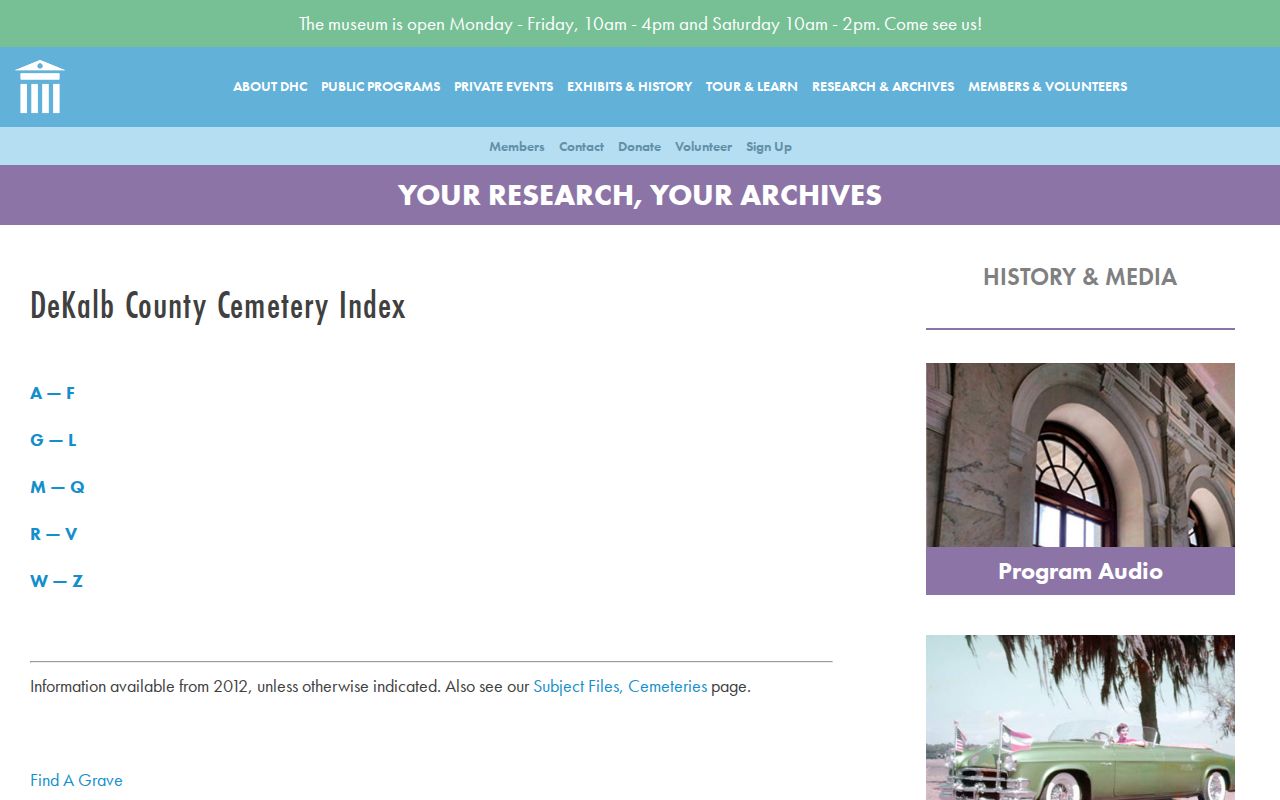
Probate Court files may name an estate, heirs, property, and addresses at the time of filing. They do not establish anyone's current whereabouts. Decatur Library also holds Decatur Cemetery records for 1837-1979 on microfiche, while the DeKalb History Center maintains a broader county cemetery index. Use the cemetery's lot, section, land lot, or district description exactly as recorded.
These endpoints help explain why a name stops appearing and can reconnect heirs or family history to a past address. Record the obituary publication and date, probate court and case number, or cemetery entry citation. If the sources conflict, keep both accounts visible until a certificate, court order, deed, or other primary record resolves the difference.
Pair DeKalb Previous Residents
Owners are only one part of the address story. Decatur Library keeps city directories dating to 1928 in print and microfilm, and DHC holds a 1928-29 volume that includes Avondale Estates, Emory University, and Scottdale. A reverse or criss-cross section, when present, arranges entries by street and number. The full collections belong with the DeKalb County city directory shelf.
- Choose the available directory volume closest to the target date. Record its title, year, page, column, and abbreviation key.
- Check the street section, then confirm the same person in the alphabetical section. Save spouse, work, and exact address only as printed.
- Compare the volumes just before and after the target year. A change gives a window, not an exact move date.
- Locate the address in the 1930, 1940, or 1950 census and record the enumeration district and household. The 1950 schedule is the newest public census under the 72-year rule.
- Resolve conflicts with deeds, obituaries, probate records, cemetery evidence, or a permit rather than choosing the most convenient name.
HeritageHub supplies obituary and death-notice images, while Decatur Library holds the Georgia Death Index and Decatur Cemetery microfiche. DHC's county cemetery index uses land lots, districts, creeks, and old crossroads, and notes some graves as moved, private, missing, or not found. Probate may identify heirs and an address at filing time, not anyone's current location.
Consult the DeKalb History Center cemetery index for a local endpoint.
Lawful use. Trace previous residents for house history, genealogy, or heirs, and never use a record to track, harass, or harm a living person.