
Begin a DeKalb County Residents Directory Search
Choose the record from the clue in hand. A street address belongs first in the DeKalb County Property Appraisal search and GIS parcel viewer. A legal transfer belongs in the Clerk of Superior Court's Landmark deed index. A person's involvement in public litigation belongs in Odyssey. Georgia My Voter Page confirms only the searcher's own registration, while a lawfully ordered voter file is a separate route. A household from an earlier decade belongs at Decatur Library or the DeKalb History Center.
No official source is a household census. The tax roll identifies the assessed owner and a mailing destination, not every occupant. Voter files omit nonvoters and protected addresses. Directories and newspapers can miss renters and communities that were poorly represented when the source was made. A careful DeKalb County residents directory search records those gaps and uses two independent facts before joining a name to an address.
- Search the appraisal roll by owner, situs address, or parcel ID.
- Use Georgia My Voter Page only to verify your own registration.
- Check Landmark for the deed, party roles, and recorded book and page.
- Move to directory volumes, census film, and obituary indexes for an older household.
- Ask the actual custodian for an existing index or file when a portal stops short.
Offices Behind the DeKalb County Residents Directory
DeKalb records are divided among elected and departmental custodians. Property Appraisal maintains assessment facts and owner searches. GIS standardizes addresses and maps parcels. The Superior Court Clerk records deeds and holds superior court files, while Registration and Elections handles voter records. Municipal records must go to the city that actually keeps them, since a postal label such as Decatur may refer to an unincorporated address. The full address chain is explained in the DeKalb County street directory.
Clerk of Superior Court, Real Estate
Courthouse research counter
Decatur, GA
404-371-2836
DeKalb Property Appraisal
Property roll and assessment records
DeKalb County, GA
404-371-2468
Registration and Elections
Voter records and corrections
DeKalb County, GA
404-298-4020
Read DeKalb County Residents Directory Property Clues
The DeKalb County Property Appraisal search is usually the quickest name-to-parcel or address-to-owner route. Its profile can show the parcel ID, situs address, assessed owner, tax mailing address, legal description, current and historical values, property traits, exemptions, and a map link. Homestead information may support an owner-occupancy clue, but it does not list everyone in the home.
| Search control | Best clue | How to interpret it |
|---|---|---|
| Parcel ID | Exact county identifier | Strongest route to one mapped parcel |
| Address | Street number and name | Uses the physical situs, not a household list |
| Owner Name | Surname or entity | Broaden spelling and distinguish people from entities |
The appraisal image in the official manifest shows the public search starting points. It links owner, address, and parcel clues without proving residence.
Open the official DeKalb property search before viewing the captured interface.
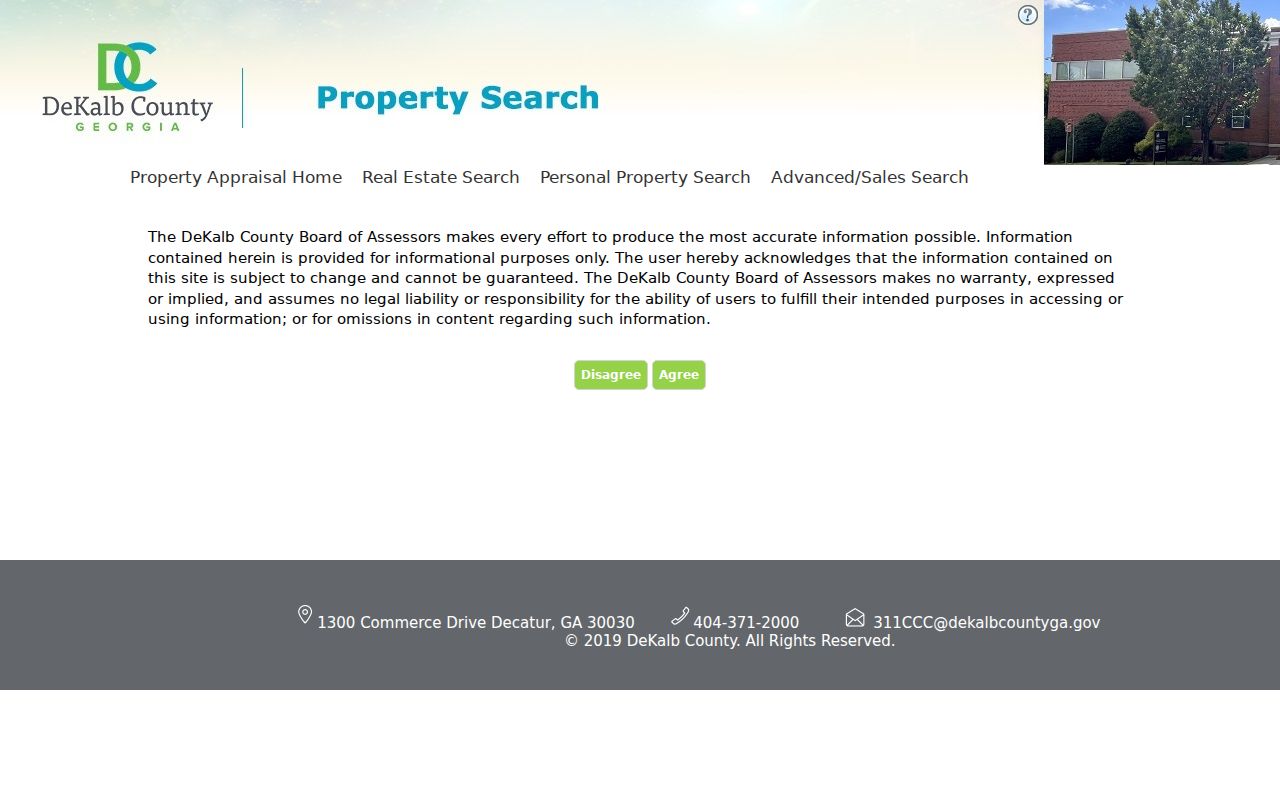
The three-field layout helps a search begin broadly, then move to a parcel profile and recorded title.
Carry a DeKalb County Residents Directory Name into Landmark
Assessment and title are different records. Landmark is the Clerk's official index for recorded deeds, security deeds, liens, plats, cancellations, and assignments from 1979 forward. Search modes include Name, Document, Book Page, Parcel ID, Record Date Range, Instrument Number, and Legal. The Clerk advises trying every spelling variation. A result can supply grantor and grantee roles, instrument number, book and page, document type, recording date, and an image where available.
The Landmark landing page shows the available index routes.
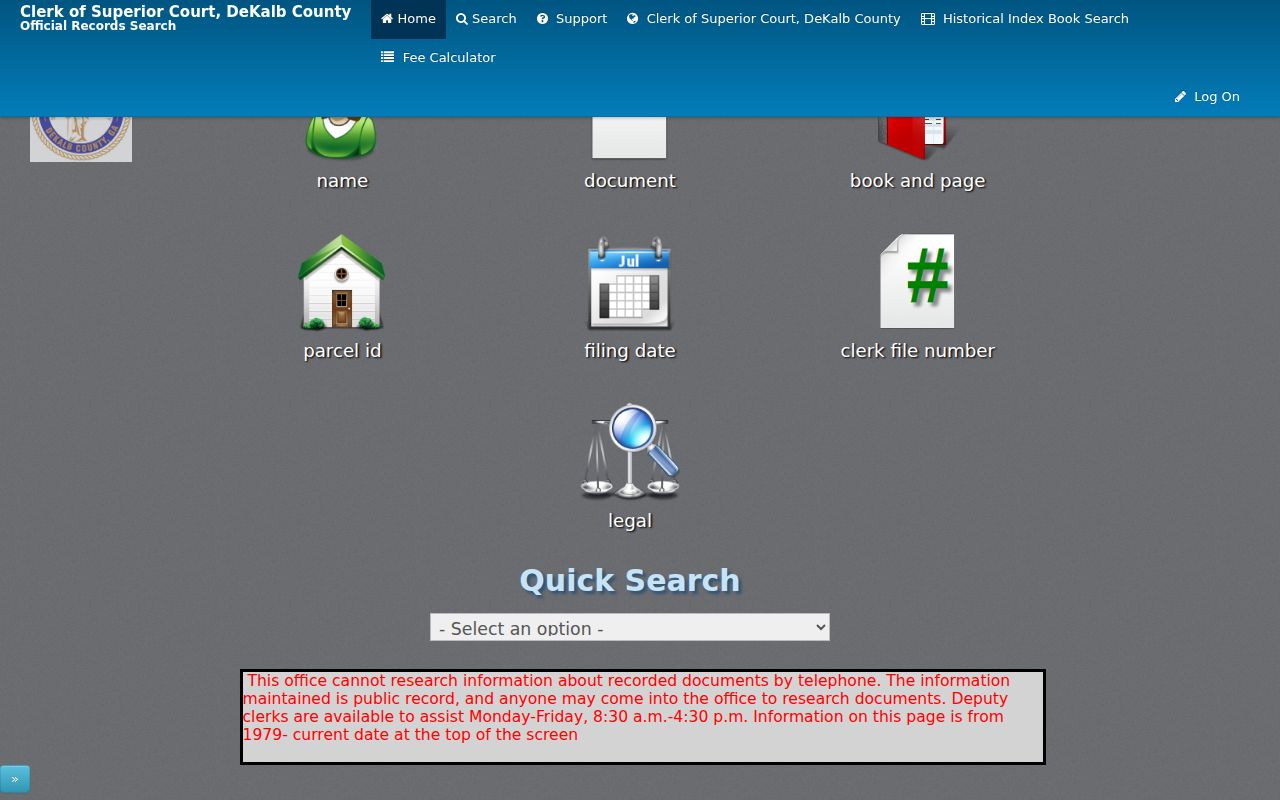
Those modes let a researcher confirm the conveyance behind a parcel rather than relying only on the tax owner's name.
Older work crosses from the web to the courthouse, Georgia Archives microfilm, or FamilySearch images. Clerk staff do not conduct deed research by telephone, though the public counter provides deputy-clerk help from 8:30 a.m. to 4:30 p.m. GIS can identify a recent deed or plat book and page from an address when the researcher lacks that bridge.
Resolve DeKalb County Residents Directory Court Names
DeKalb County divides court work among Superior, State, Magistrate, Juvenile, and Probate Courts. Odyssey is the main electronic gateway, but the right court still matters. Superior covers felony, family, title, and general civil jurisdiction. Probate holds estates, wills, and guardianship matters. Juvenile, adoption, sealed, and protected files do not become public through a related name hit.
Odyssey Smart Search accepts a party name or case number.
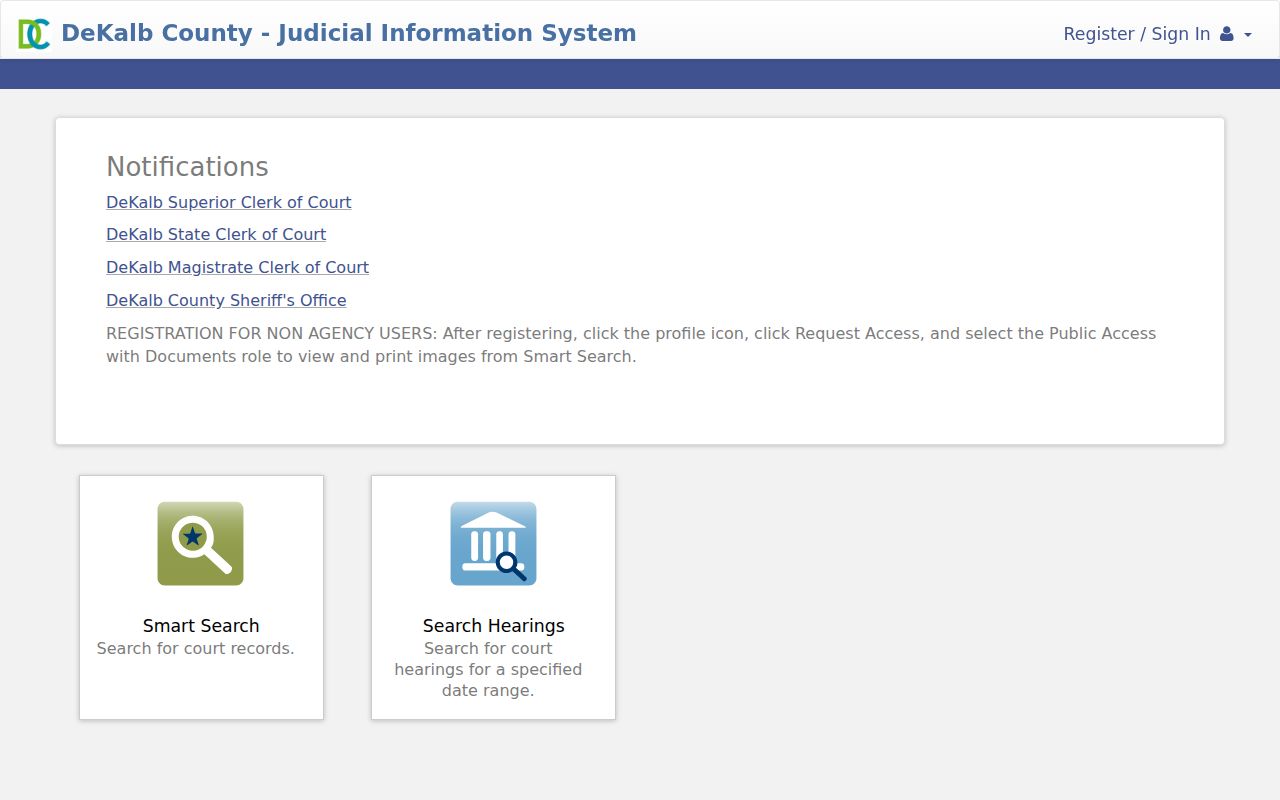
The results must be read by court, party role, case type, filing date, status, and disposition, not by name alone.
Public courthouse terminals are the fallback for images and older material unavailable remotely. Accepted Superior civil filings became electronically available after mandatory e-filing began in 2017 and the clerk went paperless in 2018. Federal DeKalb cases use the Northern District of Georgia and PACER, a separate system.
Current DeKalb County Residents Directory Sources
Modern directory evidence is scattered by purpose. The property roll concerns assessed ownership. Landmark indexes parties to recorded instruments. Voter access is divided between authenticated self-service and a statutory list order. Government staff pages concern public roles, while business and licensing indexes show official entity ties. Each source covers people the others omit.
| Source | Who It Lists | Keeper | Access |
|---|---|---|---|
| Property appraisal roll | Assessed owners | Property Appraisal | Free owner, address, or parcel search |
| Georgia voter records | Registered voters | SOS and DeKalb Elections | Self-authenticated MVP or ordered file |
| Landmark index | Parties to recorded instruments | Superior Court Clerk | Free index, 1979 forward |
| Municipal staff directories | Public officers and staff | Each city | Free official pages |
| Business and license searches | Agents, officers, and licensees | Georgia Secretary of State | Free basic verification |
Begin with the narrow question. Ownership calls for appraisal and a deed. A court identity requires the docket and disposition. A professional claim calls for the state license number and status. A reliable DeKalb resident lookup uses two independent anchors to prevent same-name errors.
Use DeKalb County Residents Directory Voter Records Correctly
Georgia My Voter Page is an authenticated self-lookup, not an open search for any DeKalb County resident. It can confirm the user's registration status, polling place, precinct, districts, sample ballot, absentee information, and participation history. Georgia does not register voters by an enduring party affiliation, even though primary participation can appear in public election data.
View the official My Voter Page entry screen.
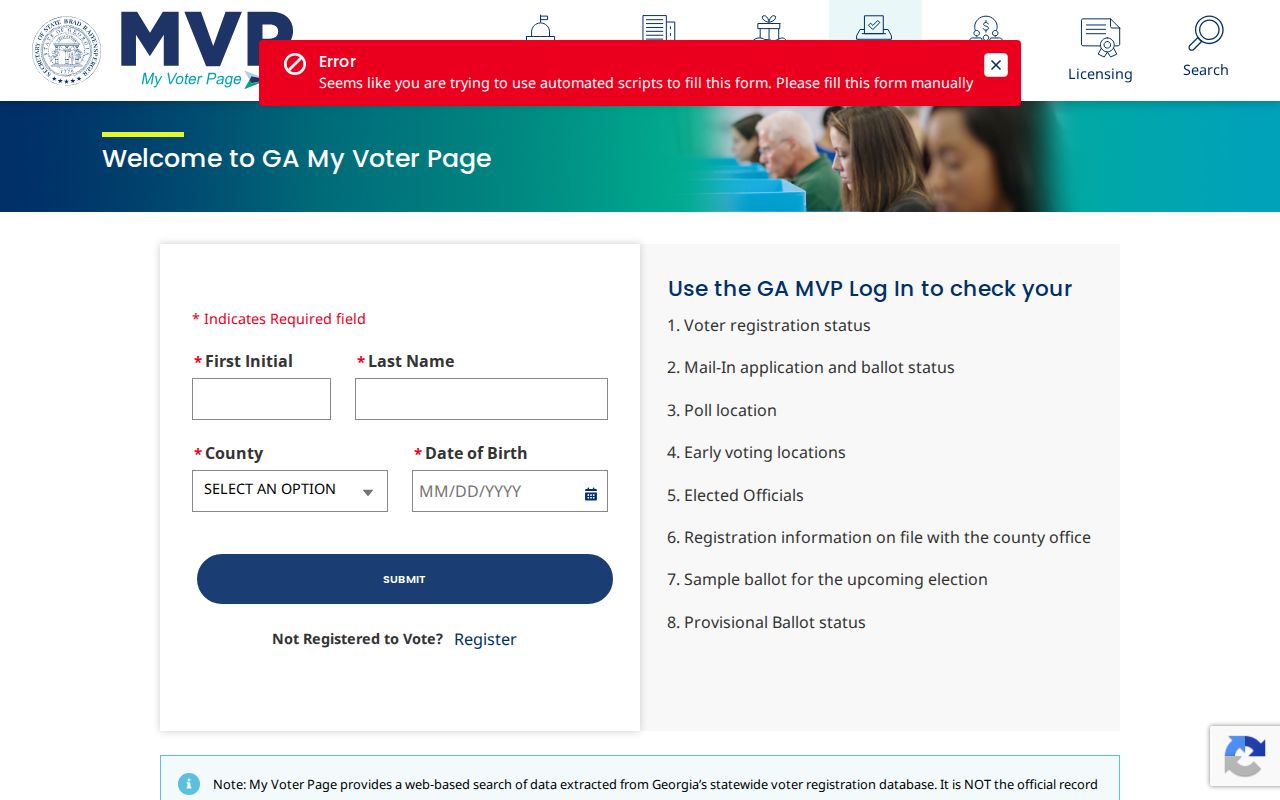
The identity prompts show why MVP cannot function as a browsable DeKalb County residents directory.
Public voter lists are separately orderable under O.C.G.A. §§21-2-225 and 21-2-234. The product may include voter name, public residence and mailing fields, status, precinct and district geography, registration date, and participation fields. It excludes telephone, date of birth, Social Security number, and driver-license data. Commercial use is prohibited, and protected addresses must remain protected.
Follow DeKalb County Residents Directory Business Clues
The Georgia Corporations Division Business Search can connect a public entity to its registered agent, officers, status, control number, and addresses. Search choices include Business Name, Control Number, Registered Agent, Officer, and Designated Agent, with starts-with, contains, and exact matching. A shared registered-agent address may serve many entities, so it is not proof that an officer lives there.
The state Business Search exposes the entity and person fields used for that check.
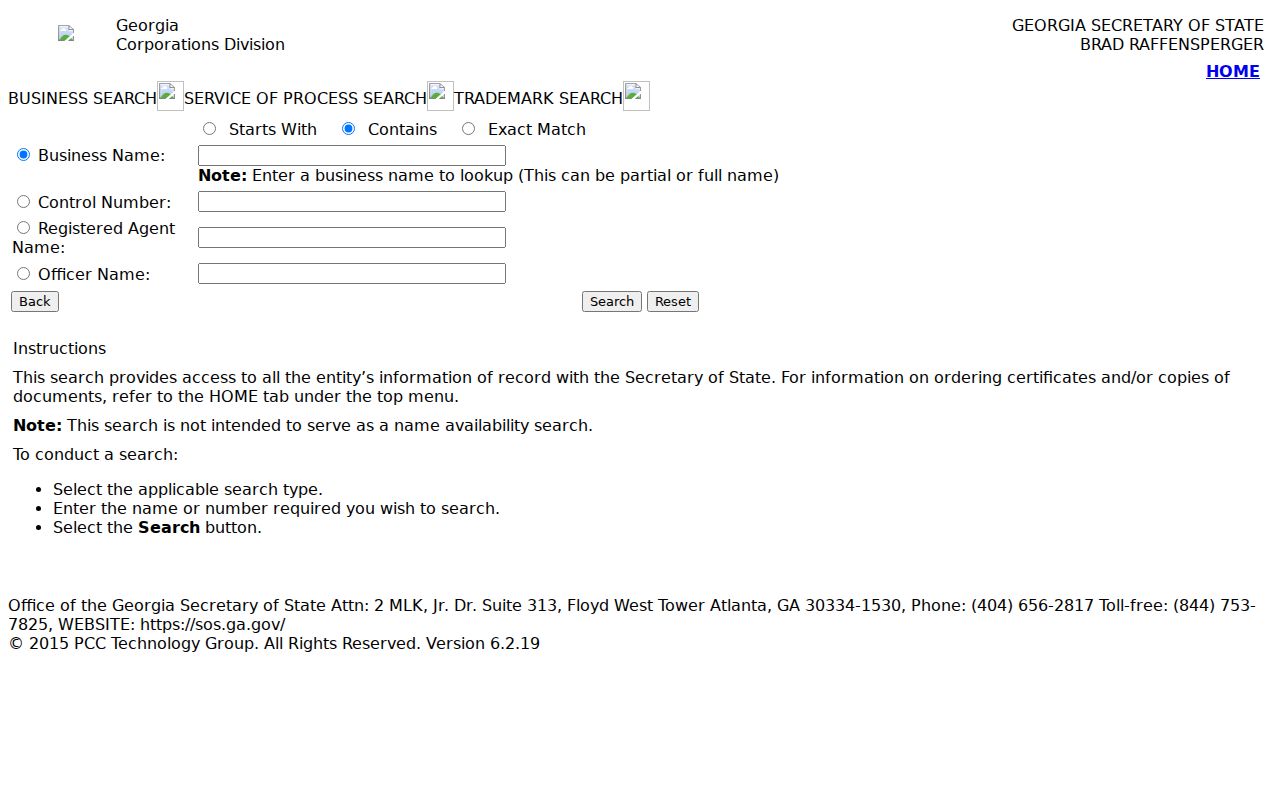
A control number or officer role is a better identity anchor than a loose name-and-county match.
The separate Secretary of State License Verification tool searches profession, license type, license number, name, and status; wildcard searches use an asterisk. These official indexes are useful for verifying a stated business or professional tie, not for inferring a private household.
Request DeKalb County Residents Directory Records Offline
Georgia's Open Records Act, O.C.G.A. §§50-18-70 through 50-18-77, provides the fallback for existing agency records that are not posted. The custodian must respond within three business days. If production cannot occur then, the response should identify the records and give a time and cost estimate. Agencies may charge reasonable search, retrieval, redaction, and copying costs, and they need not create a new report.
A useful request names the department, record series, date range, known person or address, and desired native electronic format. DeKalb routes requests to the office that actually keeps the record. Property Appraisal, Elections, Planning, and Police therefore publish separate contacts rather than relying on one universal desk.
DeKalb County's open-records page lists departments and request channels.
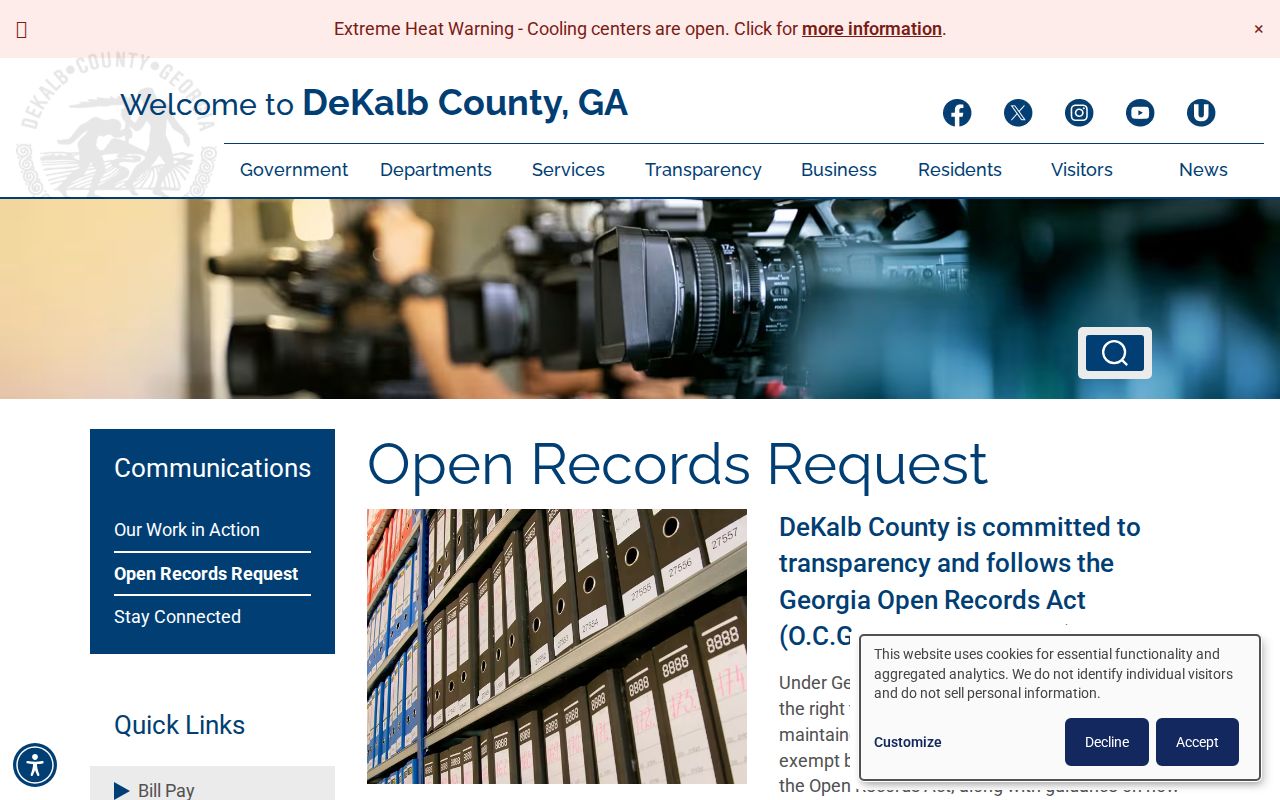
The departmental routing is part of a successful search because the wrong office may not possess the requested file.
Know the DeKalb Records Vocabulary
Public indexes are easier to combine when each term keeps its narrow meaning. Calling every result a resident record can hide the very limits that matter.
Roll: an official list made for one purpose, such as taxation or voter administration.
Index: a finding aid that points to a deed, case, or volume; it is not always the underlying image.
Parcel: a mapped unit of land identified by the county, which may differ from a household or street address.
Criss-cross directory: a directory arranged by street and house number instead of only by surname.
These distinctions explain why one person may appear as a grantee, assessed owner, registered voter, officer, or directory householder at different times. Preserve the record date and role with every name.
Bridge DeKalb's Online and Archive Eras
DeKalb's two main online thresholds do not form one seamless trail. Landmark starts in 1979, while verified local city-directory holdings begin in 1928. Earlier deeds may require courthouse books, Georgia Archives microfilm, or image browsing through FamilySearch. A directory-era household can then be paired with census, obituary, probate, cemetery, and deed evidence.
| Current and recent clues | Appraisal, GIS, Landmark, Odyssey, business, license, and voter channels use live official systems. |
|---|---|
| Older clues | Print volumes, microfilm, handwritten indexes, archival appointments, and scanned book images carry the trail back. |
The Georgia Archives Virtual Vault provides free, no-login access to more than 521,000 browsable items across its current collections. Its General Name File draws cards from state, local, and manuscript sources, while the County Records Microfilm Index helps locate DeKalb record books and possible gaps. That large archive is a finding system, not a promise that every name has been indexed.
Protect Confidential DeKalb Address Data
Some absences are legal safeguards. Georgia Safe at Home supplies a substitute mailing address to eligible survivors under O.C.G.A. Title 19, chapter 13, article 4. No one should try to reconstruct the confidential location by cross-matching deeds, voter records, court files, or business entries. O.C.G.A. §50-18-72 also protects specified personal identifiers, and the federal Driver's Privacy Protection Act restricts motor-vehicle personal information.
Lawful use. Use directory records for genealogy, reconnecting, estate work, civic research, or personal safety. Never use a lookup to stalk, harass, threaten, or expose a protected person.
Commercial compilations may be faster but can merge names, retain old addresses, or omit the date and source. Official rolls are narrower and easier to cite. Neither kind should be treated as a complete household roster. Correct an official record through its custodian, and use a publisher's removal channel for a separate commercial compilation.
Historical DeKalb County Residents Directory Shelves
Decatur Library's second-floor Reference Desk holds DeKalb and Decatur city directories dating to 1928 in print and microfilm, with some material limited to library use. The DeKalb History Center preserves a 1928-29 Decatur volume that also covers Avondale Estates, Emory University, and Scottdale. Its periodicals, neighborhood papers, architecture files, and appointment collections extend the directory trail beyond a simple alphabetical volume.
A directory entry may show surname, initials, spouse, occupation, business address, residence, and a widow notation. A street section reverses the route from address to householder. The complete shelf, abbreviation, and census-pairing workflow belongs in the DeKalb County city directory guide. At the desk, ask for both print and microfilm formats because a catalog keyword result may not represent every volume held there.
Related local holdings include Georgia census film from 1820 through 1920, the Georgia Death Index for 1919-1993 plus a 1994-1999 CD-ROM, marriage and divorce registers, Decatur Cemetery microfiche for 1837-1979, Sanborn maps, newspapers, and HeritageHub obituary images. Together they can establish that a named person appeared at an address in a particular source year. They still cannot prove an unlisted resident was absent.
DeKalb's historical geography adds another test. The county was created in 1822, and early records often identify land by district and land lot. The 15th, 16th, and 18th districts recur in deeds, plats, and DeKalb History Center cemetery descriptions. A family cemetery may be keyed to a creek or old crossroads instead of a modern postal address. Railroad towns, Atlanta annexations, new municipalities, and changing enumeration districts can also separate an old record from today's city label.
Record each citation so another researcher can repeat the search: directory title and year, page or column, alphabetical or street section, exact spelling, and the abbreviation key used. For deeds, keep party role, instrument number, book and page, recording date, and legal description. For court results, keep the court, case number, party role, filing date, and disposition. These details make the DeKalb County residents directory trail correctable when a live portal changes.